Refrigerator Noises — Seven Sounds and Which Can't Wait
A refrigerator talks all day: a soft hum, a click, a trickle of water. Most of it is normal. A few refrigerator noises are the machine asking for help — and two or three mean stop and call today. This guide decodes the seven sounds Burleson pros hear most, what makes each one, and which checks are safe at home.
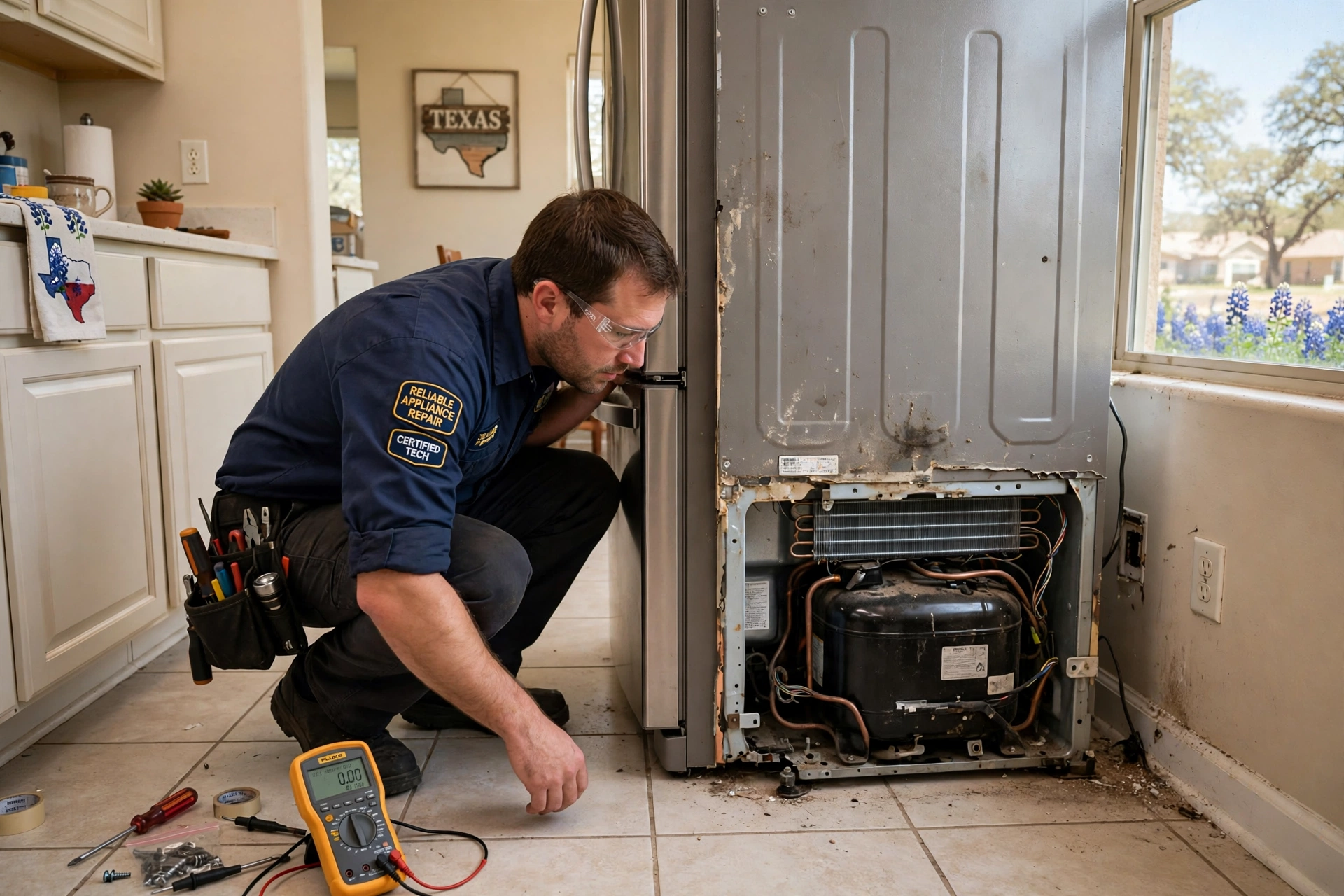
Which refrigerator sounds are completely normal?
Start with the healthy baseline. A gentle compressor hum that cycles on and off is the fridge doing its job. Soft clicks at long intervals are the defrost timer and controls switching stages, and a brief trickle or sizzle after a defrost cycle is meltwater meeting the warm drain pan.
Fans add a light whoosh when they spin up, and the ice maker keeps its own rhythm: a short buzz as the fill valve opens, then a clatter as cubes drop into the bin. Heard a few times a day and gone in seconds, all of that is a sound system working, not failing.
Sound also changes legitimately after a move or a repair. A fridge that travelled on a dolly may tick and settle for a day while its mounts relax. A new fan or relay can sound brighter than the worn part it replaced. Give honest changes 24 hours before judging them.
How loud should a healthy fridge be?
About a quiet conversation at most, and usually far less. If you can hear it from the next room with the doors open, something has changed. New volume — not volume alone — is the signal worth chasing.
What do the seven warning sounds mean?
Seven sounds cover nearly every noise call in Burleson. The table gives the short verdict first; the sections after it walk through the three that fool owners most.
One pattern outranks every row: sound plus symptom. Any noise that arrives with warming food, frost building on a back wall, or an error code on the display has stopped being a noise question. It is a cooling fault with a soundtrack.
| Sound | What usually makes it | Your move |
|---|---|---|
| Clicking, repeated every few minutes | Start relay or a compressor struggling to start | Call now — cooling fails between the clicks |
| Buzzing in short bursts | Ice maker fill valve opening for water | Normal if brief; a constant buzz means check the water line |
| Loud or rising hum | Compressor working harder than it should | Check coils and vents today; call if it grows |
| Rattling | Loose drain pan, fan blade, or an unlevel cabinet | Check the pan and the level yourself first |
| Knocking or thumping | Compressor mounts, or a fan blade striking frost | Call — frost contact means a defrost fault behind it |
| Squealing or chirping | Evaporator fan motor wearing out | Call soon — that fan moves all the cold air |
| Hissing | Refrigerant moving through the sealed lines | Soft and steady is normal; a loud hiss after a move means call |
Why does a fan noise often mean frost trouble?
The evaporator fan, hidden behind the freezer's back wall, pushes cold air through both sections. When the defrost system falls behind, frost grows on the evaporator coils until the fan blades start clipping it. Owners describe a buzzing, ticking or knocking that speeds up with the fan.
Left alone, the same frost chokes airflow until the fridge side warms — the exact chain behind refrigerator not cooling calls. A fan noise with frost on the back wall is rarely the fan's own fault. It is the defrost heater, sensor or timer asking first.
Can I melt the frost with a hair dryer and skip the call?
You can, carefully, and it buys days, not a cure. If frost returns within a week or two, a defrost part has failed and will keep failing. That repeat pattern is the moment a real diagnosis pays for itself.
When does a noise mean stop and call today?
Call the same day when clicking repeats in a rhythm and the fridge feels warm between attempts — the compressor is failing to start. Do the same for grinding or metal-on-metal sounds, which mean moving parts are meeting things they should never touch.
Add two more triggers. A new squeal from behind the freezer wall means the evaporator fan motor is dying on its feet. And any noise that shows up alongside a code belongs with the refrigerator error codes guide and a pro, not a wait-and-see weekend.
An ice maker buzz that never stops is its own case: the fill valve can stick open, or chatter against low water pressure. That path runs through ice maker repair before a noisy valve turns into a leak.
Is a clicking fridge dangerous?
Not usually a safety danger, but it is a food danger. A compressor that cannot start cannot cool, and the food clock allows about four hours at unsafe temperatures. Treat repeated clicking as urgent, not hazardous.
What will a pro check first on a noise call?
A good noise diagnosis starts with listening, not parts. The pro times the sound against the compressor cycle, the fan cycle and the ice maker cycle until the noise has an owner. Most of the seven sounds surrender at that step.
Then come the cheap confirmations: drain pan seated, cabinet level, coils clear, fan blades free. Only after those does anyone quote a motor, a relay, or a sealed-system part — and the range arrives in writing before work starts.
One habit makes every noise call shorter: record the sound on your phone before you ring. Ten seconds of audio, plus when it happens, saves the pro a full cycle of waiting for a noise that hides whenever anyone listens. More guides like this one live on the Burleson refrigerator repair blog.
Frequently asked questions
Why does my fridge buzz when the ice maker fills?
That buzz is the fill valve opening to admit water for the next batch of cubes. A few seconds is normal. Buzzing that runs long, or repeats with no ice to show for it, usually means low water pressure, a clogged filter or a valve starting to fail.
Should a brand-new fridge be this loud?
New fridges run slightly louder on the first day while temperatures settle, and modern compressors hum at a higher pitch than old ones. If a sound is unchanged after 48 hours of normal cooling, record it and call. Warranty ears are free.
Can I ignore a rattle if the fridge still cools?
For a day or two, while you check the drain pan and the level. A rattle that survives both checks is a fan blade or a compressor mount working looser. Ignored for months, it tends to introduce itself again as a bigger bill.
Why did the noise start right after a power outage?
Outages restart everything at once: compressor, fans and ice maker all demand power together, and surge stress can wound a start relay or the defrost timer. Burleson storm season makes this a familiar call. A noise born in an outage deserves a same-week check.
Does a noisy fridge use more electricity?
Often, yes. Most warning sounds are extra work made audible — a straining compressor, a frost-clipping fan, a valve fighting low pressure. Fixing the cause usually quiets the fridge and the meter at the same time.
Fridge trouble in Burleson?
Fridge making a sound it never made before in Burleson? Call (817) 803-8995 — describe the noise, and a local pro will chase it with the meter, not guesswork.