Refrigerator Temperature and Food Safety — Know Your Numbers
Set the fridge to about 38°F and the freezer to 0°F, and verify both with an appliance thermometer. Perishable food held above 40°F enters the danger zone, and the FDA clock starts ticking. This guide gives Burleson families the exact numbers, discard rules and re-chill order. If your fridge cannot hold 38°F, call (817) 803-8995.
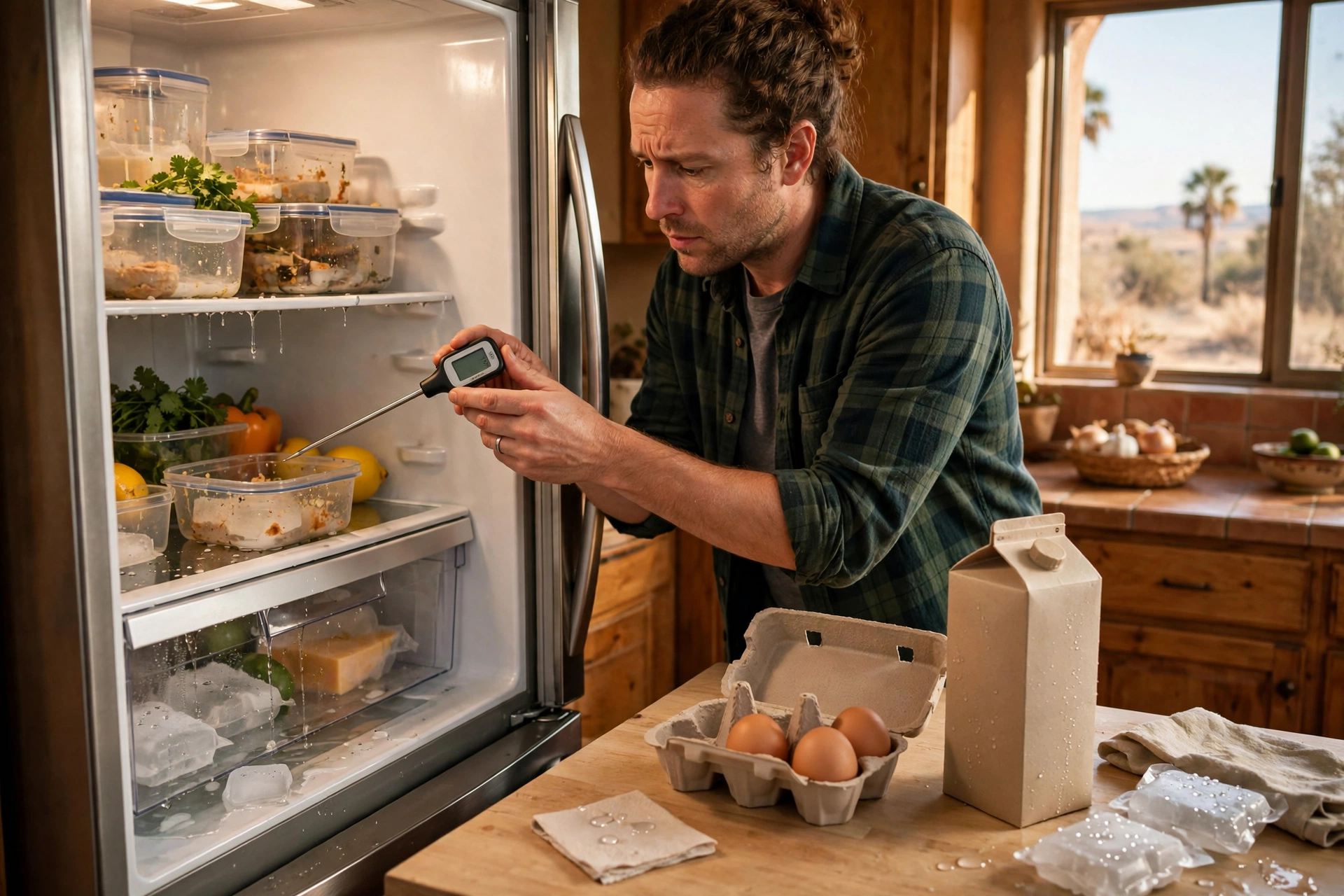
What temperatures should a fridge and freezer actually hold?
The targets are simple. Aim for about 38°F in the fresh-food section. Hold the freezer at 0°F. Both numbers sit safely below the line where bacteria grow fast.
That line is 40°F. The USDA calls 40 to 140°F the danger zone, where bacteria can double in as little as 20 minutes. Cold below 40°F slows growth hard. It does not stop every organism, which is why storage times still matter.
Do not trust the dial alone. Many fridge controls show numbers or snowflakes, not degrees. Two fridges on the same setting can run five degrees apart.
An appliance thermometer costs a few dollars and tells the truth. Hang one in the fridge and one in the freezer. Check them in the morning, before the door opens twenty times.
If the fridge reads above 40°F after a full closed night, the cooling system has a problem. Work the refrigerator not cooling ladder before you lose a full shop from H-E-B plus! on NW John Jones Dr.
Placement matters too. Keep the thermometer away from the cold-air vent, where readings run low. A middle shelf, toward the front, shows the warmest honest number your food faces. Move it once a month to spot-check other shelves.
My fridge display says 37°F. Can I trust it?
Treat the display as a setting, not a measurement. Built-in sensors sit in one spot and can drift as a fridge ages. An appliance thermometer on a middle shelf gives you the air temperature your food actually lives in. If the two disagree by more than a couple of degrees, trust the thermometer and mention the gap when you book a diagnosis.
How long does food last without power or proper cooling?
The FDA rules are worth memorising before you need them. An unopened refrigerator keeps food at safe temperatures for about four hours without power. After that, perishables that rose above 40°F should be discarded.
A full freezer holds safe temperatures for about 48 hours unopened. A half-full freezer holds about 24 hours. Food packed tightly together stays cold longer than loose items.
Keeping the door closed is the whole game. Every opening trades cold air for warm Burleson kitchen air. In an August outage, that trade is brutal and fast.
Group food together in the freezer before a long outage stretches on. A frozen block of items insulates itself. Our storm and power outage guide walks through the full sequence, including what to check when power returns.
Never taste food to judge safety. Bacteria that cause illness often leave no smell, colour change or off flavour. Time and temperature are the only honest tests.
Ice and coolers buy time, not immunity. Move milk, meat and eggs into a cooler with ice once the four-hour window looks shaky. A cooler packed full and opened rarely holds the cold far better than a warm fridge opened often.
Write down when the power went out, or when you first noticed the warmth. Guessing later leads to keeping food you should toss. A note on the fridge door settles arguments at clean-out time.
What do you keep, and what do you throw out?
When the clock runs out, sort food by category, not by hope. Meat, poultry and seafood are the strictest group. If they spent over two hours above 40°F, the USDA says discard them.
Dairy and eggs follow the same rule. Milk, soft cheeses, yoghurt and shell eggs above 40°F for over two hours go out. Hard cheeses and butter are more forgiving, and the table below reflects that.
Condiments split by type. Opened mayonnaise-based items follow the perishable rule. Most pickles, jams and peanut butter tolerate the outage window far better. Leftovers are perishables, full stop: three to four days refrigerated, and out after a long warm stretch.
| Food | Over 2 hours above 40°F | Notes |
|---|---|---|
| Raw meat, poultry, seafood | Discard | No exceptions — do not cook to save it |
| Milk, cream, yoghurt, soft cheese | Discard | Hard cheese and butter are the exceptions |
| Shell eggs and egg dishes | Discard | Includes casseroles and quiches |
| Cooked leftovers | Discard | Leftovers keep 3–4 days only when kept cold |
| Opened mayonnaise and dressings | Discard | Creamy dressings follow the perishable rule |
| Hard cheese, butter | Keep, check quality | Trim any mould from hard cheese generously |
| Jam, pickles, peanut butter | Generally keep | High acid or low moisture slows spoilage |
The power was out five hours but the fridge still felt cool. Is the food safe?
Feel is not a measurement. If an appliance thermometer reads 40°F or below, the food stayed in the safe range. If it reads above 40°F, apply the FDA clock: perishables held above that line beyond the safe window should be discarded. When you cannot verify the temperature at all, the safe call for meat, dairy and eggs is to throw them out.
What should you do after a repair, before reloading the fridge?
A repaired fridge needs time to prove itself. Let it run empty, or nearly empty, until the thermometer confirms 38°F and holds it. Stuffing warm shelves with groceries too early restarts the problem.
Reload in the right order. Move the highest-risk foods back first once the temperature holds: meat, milk, eggs and leftovers. Condiments and drinks can wait in a cooler without harm.
If the freezer section was the failure, read the freezer not freezing page before trusting it with a full meat restock. Ice cream texture is a crude gauge. The thermometer is the real one.
Frozen food that still holds ice crystals can usually be refrozen safely, per USDA guidance. Food thawed completely and held warm follows the discard rules above. Cook what you can the same day instead of gambling on a second freeze.
Big holiday loads follow the same discipline. The holiday prep guide shows how to load a fridge for Thanksgiving without pushing it over 40°F.
Watch the first full day after the repair, not just the first hour. A fridge can hit 38°F empty, then drift up once shelves fill and the door starts opening again. Check the thermometer at breakfast and again before bed.
If temperatures hold through that full cycle, restock with confidence. If they creep back above 40°F, call the pro back while the diagnosis is fresh. Do not wait for a second spoiled shop to prove the point.
The habits that hold temperatures steady between faults are gathered in the twice-a-year maintenance checklist — coils, gaskets, level and thermometer checks in one 30-minute routine, twice a year.
Why do Burleson summers and outages punish weak fridges?
Burleson's July average high is 94.7°F, and August averages 95.2°F. A fridge rejects heat into your kitchen all day. The hotter the room, the longer the compressor runs to hold 38°F.
A fridge that barely holds temperature in April can fail the test in August. Summer is when borderline fans, dirty coils and weak gaskets show themselves. Clean coils before the heat peaks, not after the milk turns.
Storm season adds the outage risk. Spring systems knock out power across Oncor territory, and a fridge full of food starts its four-hour clock. Know your numbers before the sky darkens.
If a repair cannot wait for that clock, ask about same-day refrigerator repair. Call before noon and we push for a diagnosis today. No honest service promises more than that push.
Frequently asked questions
What is the safest refrigerator temperature?
About 38°F is the practical target most food-safety guidance supports. It keeps food safely below the 40°F danger-zone line without freezing milk or lettuce at the back wall. Set the freezer to 0°F. Verify both with an appliance thermometer, not the control display. If your fridge cannot hold 40°F or below overnight with the door closed, it needs diagnosis, not a colder dial setting.
How long can food stay in a fridge without power?
About four hours in an unopened fridge, per FDA guidance. A full freezer holds safe temperatures for about 48 hours, and a half-full freezer about 24 hours. Keep doors closed to protect those numbers. After that window, discard perishables that rose above 40°F. When in doubt, throw it out — food poisoning costs far more than groceries.
Can I refreeze meat that thawed during an outage?
USDA guidance allows refreezing food that still contains ice crystals or stayed at 40°F or below, though quality may drop. Meat that thawed fully and sat above 40°F for over two hours should be discarded. When the timeline is fuzzy, cook the meat the same day and freeze the cooked dish instead. Never use taste or smell as the safety test.
Why does my fridge feel cold but the thermometer reads 44°F?
Cold spots fool hands easily. Air near the vents feels icy while shelf corners run warm, especially in a packed fridge. Trust the thermometer placed mid-shelf. Then run basic checks: clear blocked vents, clean the coils, and test the door gasket with a dollar bill. If readings stay above 40°F overnight, book a diagnosis at (817) 803-8995 before a full shop spoils.
How long do leftovers keep in a working fridge?
Three to four days at 38 to 40°F covers most cooked leftovers: meats, sides, soups and casseroles. Freeze extras on day one or two if you will not eat them in that window. Label containers with the date, and reheat leftovers until steaming hot throughout. Anything that spent over two hours above 40°F during an outage or a warm-fridge failure should be discarded, not reheated back to life.
Fridge trouble in Burleson?
Fridge running warm in Burleson? Do not gamble a full shop on hope. Burleson Refrigerator Repair connects you with an independent local pro, with a written price range before work starts. Call (817) 803-8995, lines answered early to late, seven days.