Freezer Not Freezing — Soft Ice Cream Is the First Alarm
A freezer not freezing in Burleson usually means frost is choking the coil, the fan has quit, the door leaked warm air, or the compressor is fading. Ice cream goes soft first, long before meat thaws. Act on that warning. Call (817) 803-8995 and we will match you with a local pro.
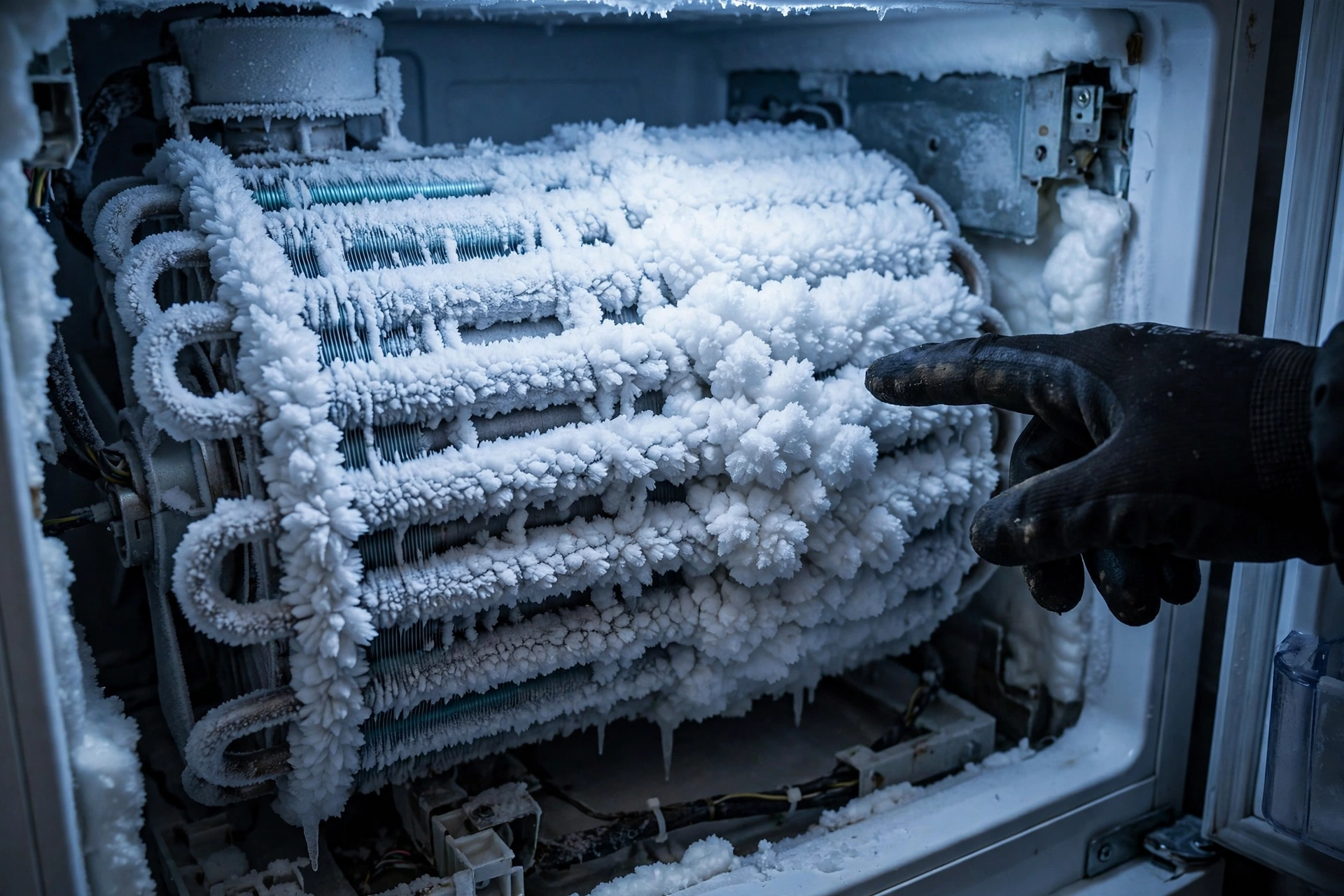
How does a wall of frost stop a freezer freezing?
Frost looks like cold. Inside the back panel, it acts like a blanket. The evaporator coil needs bare metal and moving air to pull heat out of the box.
The defrost cycle melts that coil clear several times a day. When the heater, sensor, or board falls behind, frost grows layer on layer. Air slows, then stops.
The coil can sit at deep-freeze temperature while the food compartment warms. That is the frost-wall trap. The freezer feels cold at the back wall and warm at the door.
A full manual defrost melts the wall and buys a few days. If frost returns within two weeks, the defrost system needs repair, not another melt. Note the date it returns. That timing helps the pro.
I defrosted the freezer and it worked for ten days, then warmed up again. Is that a clue?
It is one of the best clues you can give. A manual defrost resets the symptom, so a fault that returns on a steady cycle points straight at the defrost system. Tell the pro how many days the fix lasted. Ten to fourteen days is the classic pattern for a failed heater, sensor, or defrost control.
Could a door left ajar be the whole story?
Often, yes. One night with the door cracked an inch loads the freezer with humid Burleson air. That moisture lands on the coil as frost, and the frost wall starts.
Check for the usual culprits. A pizza box, a bag of peas, or a tub pushed tall can hold the door off its seal. Kids grabbing popsicles in summer do the rest.
Close the door on a dollar bill at several points. If it pulls free with no grip, the gasket leaks even when the door looks shut. Gasket replacement typically runs $75–$200 in national cost data.
If you find the door ajar, close it, clear the blockage, and wait 24 hours with a thermometer inside. A healthy freezer recovers to 0°F. One that stalls warmer has a second fault hiding behind the first.
What do fan and compressor trouble sound and feel like?
Listen before you unload the food. A healthy freezer hums, clicks off, and rests. Trouble changes that rhythm in ways you can describe on the phone.
Silence plus warmth can mean a dead evaporator fan or a compressor that will not start. A fan blade striking frost chatters, then stops when you open the door and press the switch.
A compressor that runs nonstop and still loses ground is working past its strength. Hot sides and a hot centre strip between the doors add to that picture.
| What you notice | Likely cause | Next step |
|---|---|---|
| Soft ice cream, back wall frosty | Defrost system falling behind | Pro — heater, sensor or board test |
| Warm after a door-ajar night, then recovers | Moisture load only | Owner — clear blockage, monitor 24 hours |
| Chattering that stops at the door switch | Fan blade striking frost | Pro — defrost fault behind the fan |
| Silent, warm, faint clicking | Start relay or compressor trouble | Pro only — sealed system, EPA 608 |
| Runs nonstop, sides hot, still warming | Weak compressor or dirty coils | Clean coils, then book a pro |
My freezer runs all the time and never shuts off. Is that always bad?
On a 95°F Burleson day, long run times are normal. Nonstop running with warming food is not. Clean the condenser coils first and check the door seal. If the compressor never rests and the thermometer stays above 10°F, the system is losing. That needs a pro's gauges and meter, not more waiting.
What is the ice-cream test, and what should the thermometer say?
Ice cream is a rough thermometer you already own. It softens noticeably above about 5–10°F. Firm ice cream with soft bread means a mild fault. Soup in the tub means real trouble.
Use a real thermometer for the verdict. Set the freezer to 0°F. Food keeps best at 0°F or below, and quality drops fast in the teens.
Put the thermometer between packages, not against the wall. Leave it two hours, doors shut. Read it once, then decide.
The same split hits fridge-freezer combos. If the fresh-food side warms too, our fridge not cooling guide works the shared ladder. Our food safety guide gives the keep-or-toss detail by food type.
What food do I throw out, and what can I save?
The FDA discard rules are plain. Meat, poultry, seafood, milk, and eggs that sat above 40°F for over two hours go out. Do not taste food to test it.
Food still holding ice crystals, or at 40°F or below, can usually be refrozen safely. Quality suffers, safety does not. Bread, hard cheeses, and unopened juices are the forgiving items.
The outage clock helps even without an outage. A full, unopened freezer holds safe temperatures about 48 hours. A half-full one holds about 24 hours. Every door opening shortens both.
Sort fast, with a cooler ready. Keep the good food packed tight together. It stays colder as a group while you deal with the repair call.
What will the repair cost, and who do I call?
Most freezer faults are fan or defrost work. Angi's October 2026 figures put fan motors and defrost heaters at $100–$250 each, inside a typical repair range of $150–$400.
Compressor work runs $300–$800, and sealed-system jobs can reach about $1,200. Check the full freezer repair cost picture and the dedicated freezer repair service page for combo, upright, and chest units.
Garage units fail differently in August heat. If yours lives out there, read the garage fridge Texas heat guide before you replace anything. The box may be fine in a room it was never rated for.
Burleson Refrigerator Repair connects homeowners with independent local pros. The pro tests first, gives a written price range, and starts no work without your OK.
Frequently asked questions
Why is my freezer cold but not freezing food solid?
That middle state means cooling exists but cannot keep up. Frost on the coil, a weak fan, a leaking gasket, or dirty coils all land there. Check the thermometer, not the feel of the packages. If the box holds 15–20°F instead of 0°F after a day with the doors shut, a part is failing and needs testing.
How long does a freezer keep food safe without cooling?
A full freezer holds safe temperatures about 48 hours if the door stays shut. A half-full freezer holds about 24 hours. Pack food tight together to stretch the window, and move the best items to a cooler with ice if a repair will take longer. Once perishables sit above 40°F for over two hours, the FDA says throw them out.
Can I just defrost the freezer myself and skip the repair?
A manual defrost is a good test and a fair stopgap. Empty the food into coolers, unplug, leave the doors open, and let the ice melt without chipping at it. If the freezer then holds 0°F for two weeks or more, you may be done. Frost and warming that return sooner mean the defrost system itself has failed.
Is soft ice cream always a sign the freezer is broken?
Not always. Ice cream softens if the door stood open, if warm food just went in, or if the bin sits in the door rack, the warmest spot. Move it deep in the box and check again in a few hours with a thermometer. Soft ice cream plus warm meat packages and a rising thermometer is a real fault.
Who do I call for a freezer in Burleson that will not freeze?
Call (817) 803-8995. Burleson Refrigerator Repair connects homeowners with independent local pros across 76028 and 76097. Describe the sounds, the frost, and your thermometer reading. Those three details route the diagnosis fast. Lines are answered early to late, seven days, and calling before noon gives the best shot at a diagnosis the same day.
Fridge trouble in Burleson?
Ice cream soup in Burleson? Call (817) 803-8995 now. Keep the door shut, note the thermometer reading, and tell us what you hear. We will match you with a local pro who tests first and quotes a written range before work starts.