Garage Refrigerator Texas Heat — At the Ceiling All August
A garage fridge in Burleson works at its design ceiling all August. Standard units are rated near 110°F, and closed garages run 100–115°F then. Burleson Refrigerator Repair connects owners with independent local pros for heat failures. Call (817) 803-8995 before the next heat wave peaks.
What is the heat ceiling for a standard fridge?
Every fridge rejects heat into the room around it. Hotter room air makes that job harder. The compressor runs longer and hotter to hold the same cold.
Most standard fridges are rated to about 110°F ambient. That number is a ceiling, not a comfort zone. Running near it all day shortens component life.
Burleson summers sit close to that line. The local August average high is 95.2°F. July averages 94.7°F under NWS normals.
A closed garage traps heat above outdoor air. Inside readings of 100–115°F are common in August. Metal doors and west sun push the high end.
So the garage unit never gets a cool break. It runs at ceiling load for weeks. That is why August kills them.
Door openings add load in a hot garage. Each opening dumps cold into 110°F air. The unit then runs long to pull temps back down.
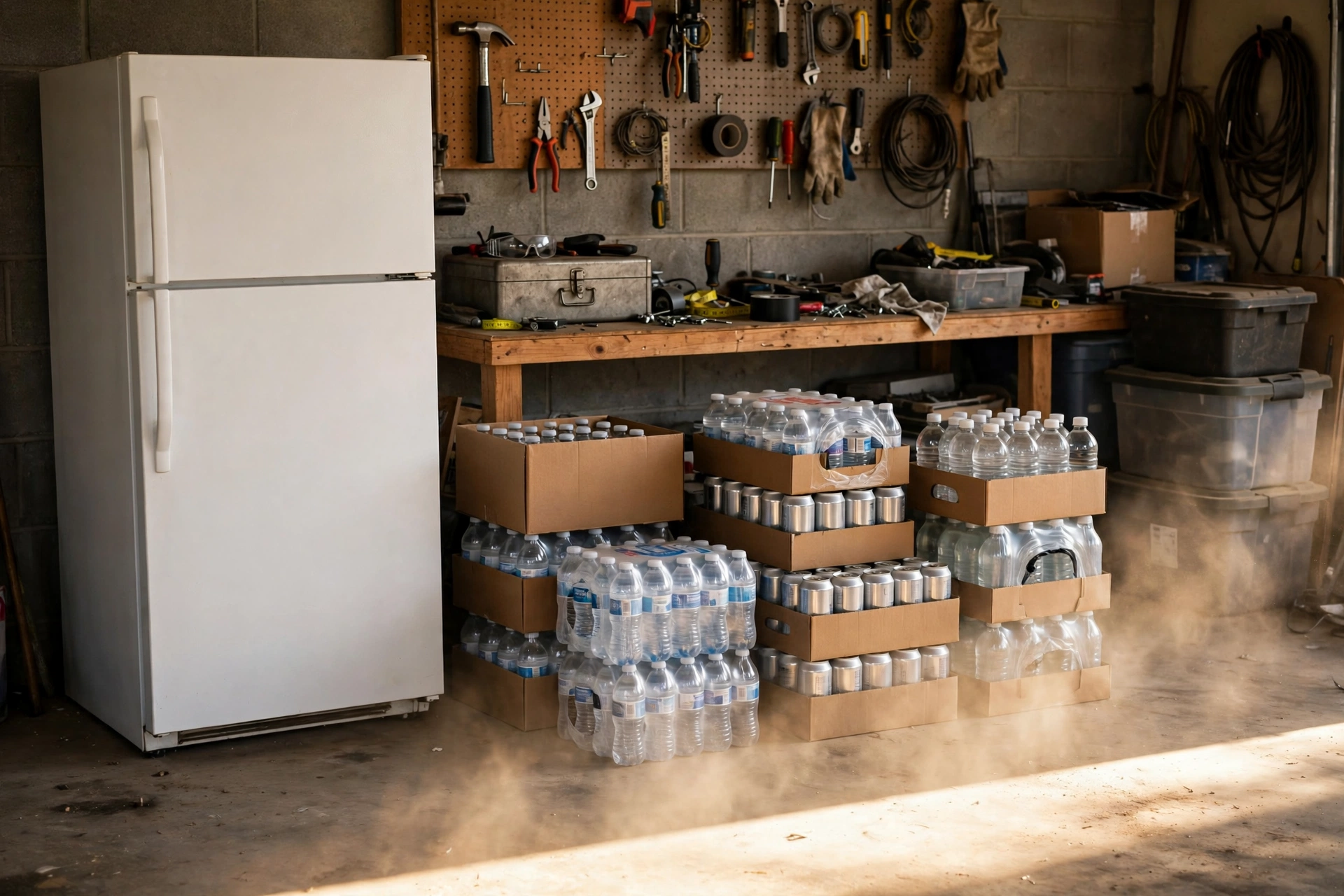
Bulk storage helps when shelves stay full. Cold food holds temperature better than empty air. Fill gaps with water jugs in a light week.
Check the thermometer at the hottest hour. A 4 p.m. reading tells the truth. Morning readings flatter a fridge that fails by dinner time.
Garages near Hidden Creek Parkway run hot and still. Few have windows that move real air. That still air is part of the local failure pattern.
My garage fridge runs all the time in summer. Is that normal?
Long run times are normal in August heat. Nonstop running with warming food is not. Check coils, door seals, and airflow first. If the sides feel very hot and food still warms, the unit is losing the heat fight and needs a diagnosis, not more time.
What fails first when a garage fridge overheats?
The order is fairly steady. Dirty coils and weak condenser fans fail the heat test first. The compressor then runs hot for longer stretches.
Next come start parts and boards under stress. Clicking, short cycles, and warm restarts point that way. Ice makers quit early too, since fill cycles slow.
Door gaskets soften and leak in heat. Warm air slips in at the corners. Frost and condensation show where the leak lives.
Food tells the final story. Ice cream softens first in the freezer. Milk sours fast in the door shelves.
Catch the early steps and the bill stays small. Fan work sits at $100–$250 in Angi's October 2026 figures. Compressor work runs $300–$800.
Listen for the pattern change too. Short, frequent starts can signal start-part strain. Long groans before start point the same way.
Smell the air near the unit weekly in August. A hot electrical smell is a stop sign. Unplug the unit and book a diagnosis that day.
Keep flammables away from the back coils. Paint, fuel, and solvents share many Burleson garages. Heat plus clutter raises risk around a straining compressor.
August bills tell the story too. A straining garage unit can lift summer power use. Watch the bill when run times stretch past normal.
| Stage | What you notice | Typical range |
|---|---|---|
| Coils / fan | Runs constantly, hot sides | $100–$250 for fan work |
| Gasket leak | Frost, condensation at door | $75–$200 |
| Ice maker slows | Small cubes, then no ice | Repair near $200 |
| Board / start parts | Clicking, warm restarts | $80–$800 for boards |
| Compressor strain | Both sections warm | $300–$800 |
Why does the same fridge stop cooling in winter?
The cold flip surprises many owners. A standard fridge senses temperature in the fridge section. The freezer cold follows that call for cooling.
When garage air drops below about 38–50°F, the thermostat may never call. The compressor rests. The freezer then warms toward room air and thaws.
Burleson winters are mild most days. January lows average near the low thirties, though. Cold snaps push garages into that dead zone fast.
Winter Storm Uri proved the extreme case. Fort Worth hit −2°F on February 16, 2021. Garage freezers across North Texas thawed in that week.
Use a freezer thermometer all winter. Thawed and refrozen food can look fine. Looks do not prove safety.
Test the freezer with ice cream first. Soft edges on a firm tub warn early. Rock-hard centre with soft edges still means drift.
Meat safety needs stricter maths than drinks. Coolers of soda forgive warm spells that raw brisket does not. Store high-value meat in the house freezer during heat waves.
During Red, White & BTX week, loads spike hard. Party ice, drinks, and sides fill every shelf. Plan that load before July, not during the fireworks weekend.
After Uri, many owners added thermometers. That habit is cheap and worth keeping. One glance each cold morning prevents a full freezer loss.
My garage freezer thawed in a cold snap, but the fridge feels cold. Why?
That split is the classic cold-flip sign. The fridge section reached its set point in cold garage air. The control stopped calling for cooling, so the freezer drifted up. Food that spent hours above safe cold should be judged by temperature and time, not by how solid it feels later.
What makes a fridge garage-ready?
Garage-ready models are built for wide swings. They handle hot August air and cold January air. Their controls keep the freezer cold in both cases.
Look for a stated wide ambient range. Vague garage-friendly labels mean little. Real ratings list low and high limits in the spec sheet.
Some standard freezers take a garage heater kit. The kit tricks the control into running in cold air. It fits listed models only, so check first.
Size the unit for real use. A half-empty fridge works harder in heat. Full shelves hold cold better once they are chilled.
If the old unit is near the end, read the repair vs replace guide first. Garage duty changes that maths, as the verdict section below shows.
Ask for the ambient range in writing. Retail staff may not know the low end. The spec sheet and manual settle garage claims fast.
Look at door style with heat in mind. Single-door freezers lose less cold per opening. Wide French doors dump more cold in hot air.
Wheels and level feet matter on slab floors. An unlevel unit strains its door seal daily. Check level at install and again after the first summer.
Check warranty terms before you buy. Some brands limit cover for garage use. A garage-ready rating in the paperwork protects that claim later.
What venting and shade changes actually help?
Start with air space. Leave room behind and above the unit. Heat must escape from the coils, or it recycles back in.
Clean coils matter more in a garage. Dust, grass, and shop debris coat them fast. Vacuum them before summer and again in midsummer.
Shade the heat source, not just the box. A sun-blasted garage door heats the whole room. Insulated doors and shaded walls cut peak air temps.
A small fan can move hot air out. It helps most near the ceiling. It will not save a dying compressor, though.
Never box a fridge into tight cabinets outside. Trapped heat is the fastest way to kill a second unit. For true freezer faults, see freezer repair and the freezer not freezing guide.
Pests and dust ride summer into garages. Rodent nests near warm coils add fire risk. Clear the back area during each coil cleaning.
A drip pan under the unit helps spot leaks. Garage floors hide slow leaks for weeks. A pan turns a hidden leak into a visible puddle early.
If the garage holds a chest freezer too, space both units apart. Two heat sources side by side cook each other. Air between them is cheap cooling.
Never aim a space heater at a cold fridge. Blunt heat near coils and lines adds new risks. Use a maker-approved heater kit for cold-garage duty instead.
Should you relocate, repair, or replace it?
Relocate when the fridge itself is healthy. A shaded, ventilated spot can fix the load. A move inside beats a new unit in a brutal garage.
Repair when the fault is early and cheap. Fans, gaskets, and coil care fit that box. Keep Angi ranges in view while you decide.
Replace when heat strain hits the compressor. Sealed-system work can reach about $1,200 in national data. That spend on a heat-worn unit rarely pays back.
Replace with garage-ready if the spot stays. Buying another standard unit repeats the cycle. The second August will be just as hot.
Check full costs on the refrigerator repair cost page before you decide. Storm damage follows different rules, covered in the storm and outage guide.
Use age honestly in that verdict. A 14-year-old standard unit owes you nothing. Its next heat failure is a pattern, not bad luck.
Add power costs to the maths too. A straining unit can draw far more power. Months of long run times quietly erase the savings of a cheap repair.
Write the verdict down before you call. Owners decide better with numbers on paper. Heat, age, and quote together should drive the choice, not hope.
Frequently asked questions
Can a regular refrigerator survive a Texas garage?
Some do for years, and some fail in one hard August. Survival depends on garage heat, coil care, and unit age. Standard units are rated near 110°F ambient. Closed Burleson garages can run 100–115°F in August. A garage-ready model removes most of that gamble by design.
Why does my garage fridge work in spring but fail in August?
Spring air lets the fridge reject heat with ease. August garage air sits near its rating ceiling. Run times stretch, coils and fans fall behind, and food warms. The fault was building all summer. August is when the maths finally shows on the thermometer.
Is it worth repairing a garage fridge that needs a compressor?
Often not, unless the unit is young and garage-ready. Compressor work runs $300–$800 in Angi's October 2026 figures. Sealed-system totals can reach about $1,200. Apply the repair rule, then adjust for garage duty. A standard unit going back into peak heat is a weaker bet.
How can I tell if garage food is still safe?
Use a thermometer, not touch or smell alone. Perishables held above 40°F for over two hours should be thrown out. A full freezer holds safe cold about 48 hours without power. A half-full freezer holds about 24 hours. When time and temperature are both unknown, throw it out.
Does opening the garage door during the day help the fridge?
It can cut peak heat on still, hot days. Moving air helps the room shed heat. It helps less when outdoor air is already near 100°F. Treat it as a small aid, not a fix. Clean coils, air space, and shade give larger, steadier gains.
Fridge trouble in Burleson?
Garage fridge losing the August fight in Burleson? Call (817) 803-8995 with the brand and symptoms ready for a clear verdict.