Hard Water Ice Maker Problems — Burleson's Honest Number
Burleson's water measures 129 mg/L, or 7.5 grains per gallon — moderately hard, not extreme. That level will not kill an ice maker in a year. It does lay down slow scale in valves, fill tubes and filters over several years. Here is what that scale does, and what actually helps. Call (817) 803-8995 if your ice already slowed.
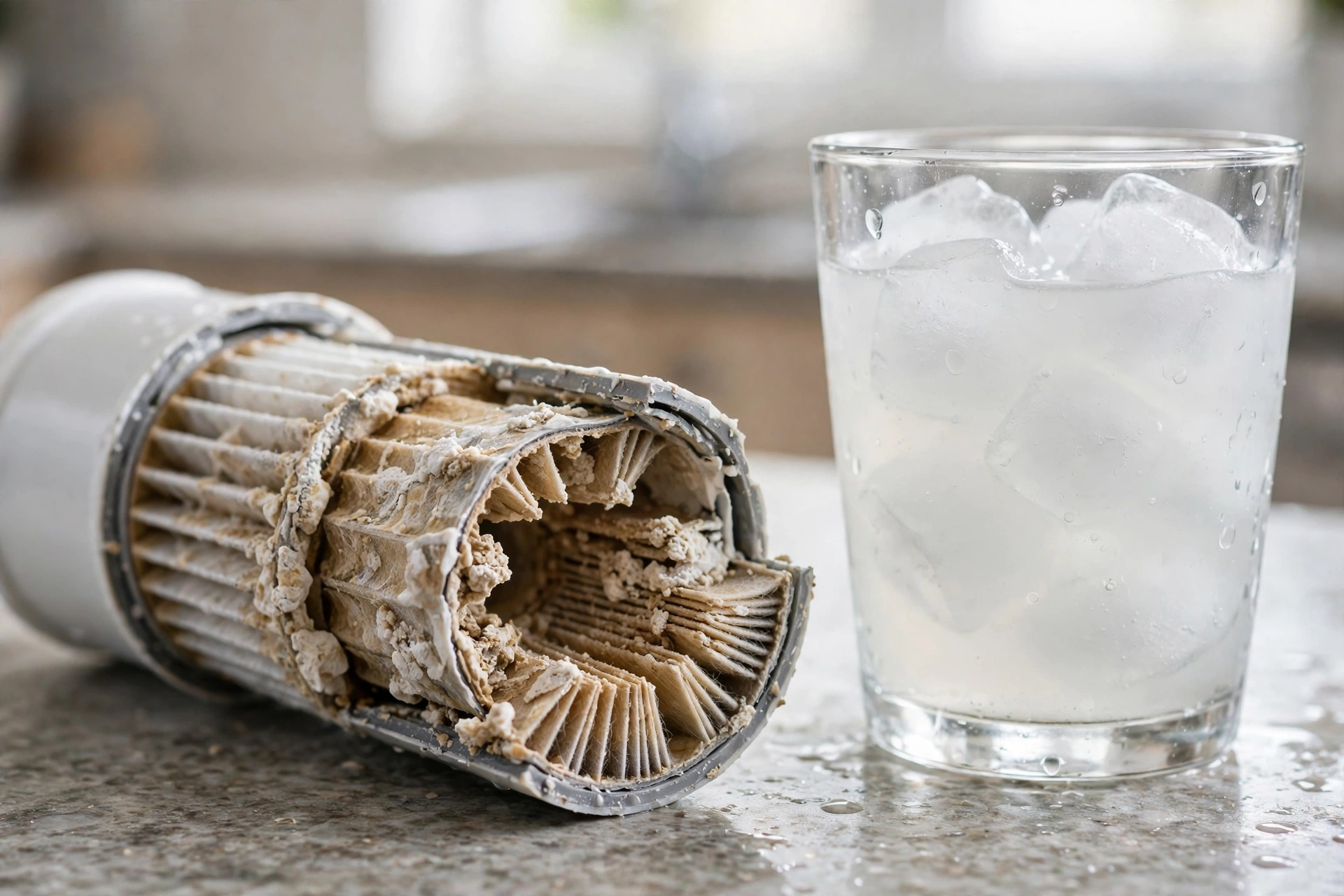
What is Burleson's real hardness number, and where does the water come from?
Burleson buys treated drinking water from the City of Fort Worth. Fort Worth draws surface water through the Tarrant Regional Water District from reservoirs including Lake Worth, Eagle Mountain Lake and Cedar Creek Reservoir.
The hardness figure tied to that supply is 129 mg/L, which equals 7.5 grains per gallon. On the standard scale, that sits in the moderately hard range. It is real, but it is not extreme.
You may see a far higher number quoted online for this area. Treat any figure near double this one with suspicion. It comes from county-level estimates, not a Burleson tap measurement.
So set expectations honestly. At 7.5 grains per gallon, scale builds slowly, over years of daily fills. That slow build is exactly why the symptoms below creep up instead of striking overnight.
Is Burleson water hard enough to damage appliances?
It can contribute over time, but slowly. At 7.5 grains per gallon, mineral scale builds in narrow water paths over years, not months. Ice makers feel it first because their valves and fill tubes are small. Regular filter changes and an occasional valve-screen check keep most homes ahead of it. Dramatic overnight damage claims do not match this number.
How does scale actually build inside an ice maker?
Every ice cycle sends a small shot of water through the same narrow path. Water enters through the inlet valve at the back of the fridge. A fine screen inside that valve catches grit before it can jam the mechanism.
Scale forms on that screen first. Dissolved minerals settle out as water passes, layer by layer. The screen slowly narrows, and each fill takes a little longer.
The fill tube is the next choke point. It carries water up to the ice mold, and its opening is small. Mineral crust there means less water reaches the mold on each cycle.
The water filter catches some minerals and sediment too. As it loads up over its six-month life, flow drops further. Old filter plus scaled screen plus crusted tube adds up to one result: not enough water, on time, in the mold.
None of this needs a sealed-system repair. These are water-path parts, and a pro can test each one. That is why honest diagnosis checks flow before quoting a new ice maker.
What does the symptom ladder look like, from first sign to no ice?
Hard water ice maker problems almost always climb the same ladder. Learning the rungs tells you how urgent your call is.
Rung one is slow ice. The bin takes noticeably longer to fill than it used to. Most people shrug this off for months.
Rung two is small or hollow cubes. The mold is not filling fully before the freeze cycle ends. Drinks melt the thin cubes fast, which is often when families notice.
Rung three is missed cycles and odd shapes. Cubes stick together, come out cloudy or white-crusted, or the maker skips cycles entirely. White crust is mineral residue riding along with the ice.
Rung four is no ice at all. The valve screen or fill tube has narrowed enough to starve the maker, or the valve itself fails. At that point, book ice maker repair and describe which rungs you passed. That history helps the pro start at the right part.
One warning: a scaled valve can also weep or drip at the back of the fridge. Water on the floor is a different urgency. Work through the refrigerator leaking water checks the same day.
My cubes turned small and white almost overnight. Is that scale?
Probably not scale alone. Scale narrows flow over months, so cubes shrink gradually. A sudden change in a week or two more often means a clogged filter, a kinked line, or a freezing fill tube. Change the filter first if it is old. If small cubes persist, a pro should test valve flow and freezer temperature.
Do pitcher filters or fridge filters solve the scale problem?
Here is the pitcher-filter myth, plainly. A countertop pitcher can improve taste for drinking water. It does nothing for your ice maker, because the ice maker never drinks from the pitcher. It fills from the plumbed line at the back of the fridge.
The fridge's own filter matters more, but know its limits. Most refrigerator filters target chlorine taste, odour and sediment. They are not water softeners, and they do not strip out hardness minerals in any lasting way.
What the filter does do is protect flow. A fresh filter keeps sediment off the valve screen. An overdue filter chokes flow itself and mimics a scale problem.
Keep the six-month cycle, and mark the change date on the filter. New to the house? The new homeowner guide includes the filter calendar most Burleson families set up in week one.
If cubes still shrink on a fresh filter, the restriction sits deeper: valve screen, fill tube or the valve itself. Those are pro checks, not filter swaps.
Does a water softener pay for itself on appliance protection alone?
Softener sales pitches love appliance fear. Run the numbers with hedges instead. A whole-home softener is a real purchase, with install, salt and upkeep on top. Its value spreads across showers, laundry, water heaters and every tap — not just one ice maker.
Compare that with the targeted fix. A water inlet valve repair runs $180 to $400 in national cost data. An ice maker module repair averages about $200, with replacement at $250 to $600. Those are once-in-years costs at 7.5 grains per gallon.
| Option | Typical cost range | What it covers |
|---|---|---|
| Whole-home softener, installed | Varies widely by home and system — get local quotes | All fixtures, plus ongoing salt and maintenance |
| Refrigerator filter, per change | Low-cost consumable, changed every 6 months | Taste, odour, sediment — not true softening |
| Water inlet valve repair | $180–$400 | Restores ice maker and dispenser water flow |
| Ice maker replacement | $250–$600 | A new maker when the unit itself has failed |
Will a softener help my washer too?
Soft water is gentler on laundry and can reduce scale inside a washer's valves and hoses over time. That is a whole-home benefit, separate from the ice maker math. If your washer already fills slowly or leaves gritty residue, mention both appliances when you book. Our washer repair service covers the laundry side of the same water story.
When is it the water, and when is it time to call a pro?
Do the free checks first. Confirm the filter is under six months old. Check the supply line behind the fridge for kinks. Make sure the freezer holds about 0°F, because warm freezers make slow ice too.
Then watch one full day of production. A healthy maker fills steadily through the day. A starved one falls further behind with every cycle.
Stop and call when ice stops completely, when cubes stay small on a fresh filter, or when you see water at the back of the fridge. Those signs point to the valve, the fill tube or the maker itself.
Burleson Refrigerator Repair connects homeowners with independent local pros who test flow before quoting parts. Compare any quote with the refrigerator repair cost guide first. The pro gives a written price range, and no work starts without your OK.
Frequently asked questions
How hard is Burleson's water, really?
129 mg/L, or 7.5 grains per gallon — moderately hard. Burleson buys treated surface water from the City of Fort Worth through the Tarrant Regional Water District. That is enough hardness to build slow scale in small appliance water paths over years. It is not enough to justify panic purchases. Anyone quoting you a number near double that owes you a tap test to prove it.
How often should I change my refrigerator water filter in Burleson?
Every six months is the standard cycle most makers publish. Set a phone reminder, because flow drops quietly as the filter loads. An overdue filter is the cheapest cause of slow ice and weak dispenser flow. Write the change date on the new filter with a marker. If slow ice continues on a fresh filter, the problem sits deeper in the valve or fill tube.
Can hard water make my ice taste bad or look cloudy?
Yes. Mineral content can leave cubes cloudy and slightly white, and taste follows the water. A fresh fridge filter improves taste and odour for most homes. Cloudy cubes alone are usually cosmetic, not unsafe. Treat shrinking cubes, slow production and missed cycles as the real warning signs. Those point to restricted flow, not just looks.
What does it cost to fix a scaled inlet valve?
Water inlet valve repair runs $180 to $400 in national cost data, depending on the model and access. A full ice maker replacement runs $250 to $600 when the maker itself has failed. Diagnostic visits typically run $50 to $100 across the market. The pro we match you with confirms the failed part first, then gives a written price range before any work starts.
Should I buy a water softener just to protect my ice maker?
On the ice maker alone, usually not. At 7.5 grains per gallon, the targeted repairs cost a few hundred dollars once in years, while a softener is a much larger install plus upkeep. A softener can still make sense for the whole home: showers, laundry, water heater and scale on fixtures. Just do not let anyone sell it as an urgent ice maker rescue. Get local quotes and decide on the full picture.
Fridge trouble in Burleson?
Ice shrinking, slowing or gone in Burleson? Burleson Refrigerator Repair connects you with an independent local pro who tests the water path before quoting parts, with a written price range first. Call (817) 803-8995, lines answered early to late, seven days.